
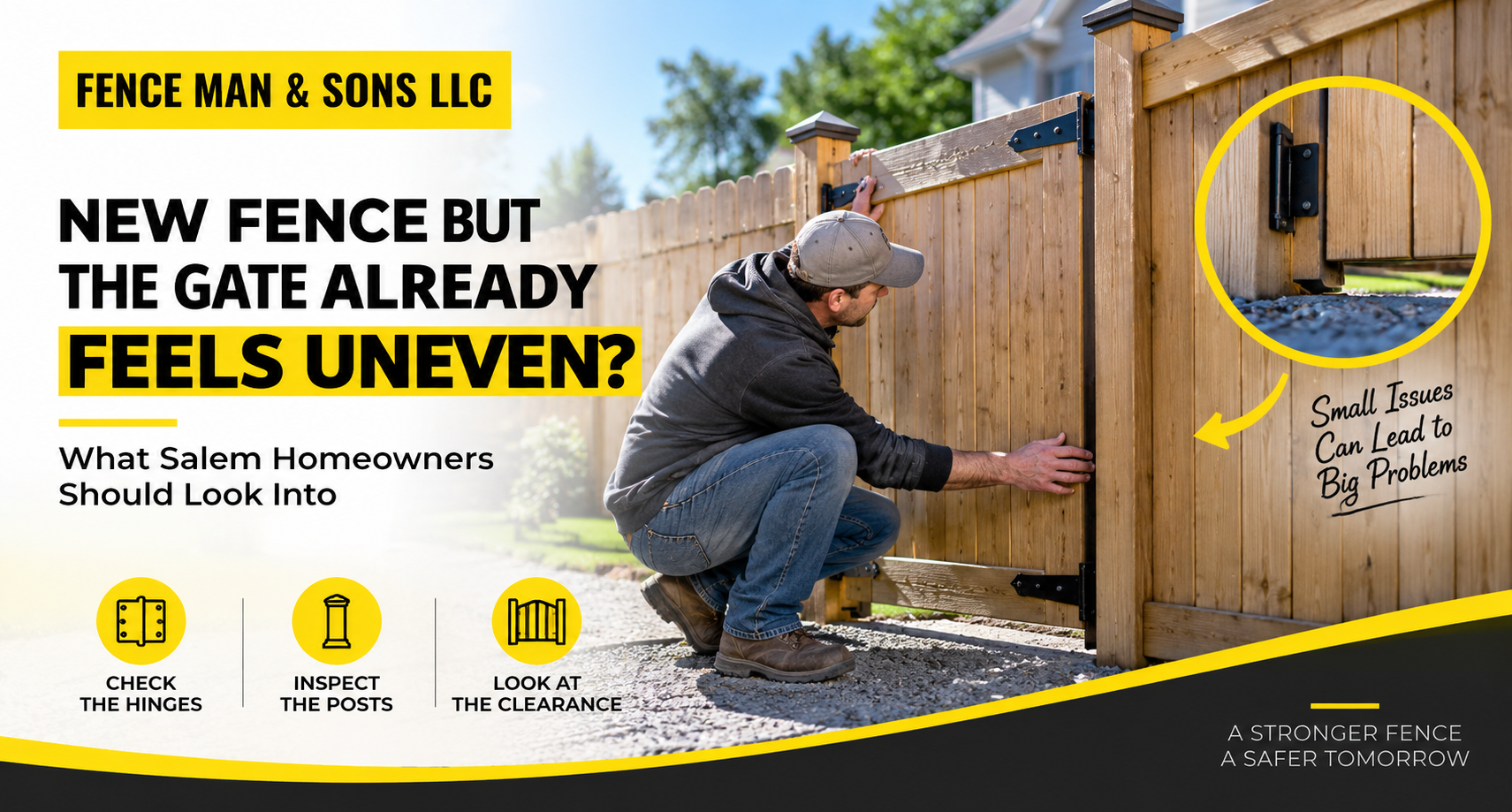
Installing a new fence should make your property feel more secure, organized, and finished. So, when a newly installed gate already looks uneven, drags slightly, or does not line up properly with the latch, it can be frustrating.
An uneven gate does not always mean the entire fence was installed incorrectly. Gates are moving parts that place additional pressure on posts, hinges, and hardware. Ground conditions, gate weight, alignment, and even seasonal changes can affect how they operate. For Salem homeowners, understanding what may be causing the problem can make it easier to determine whether the gate needs a simple adjustment or a closer professional inspection.
Start by Checking What “Uneven” Actually Means
Before assuming there is a major problem, look carefully at how the gate sits when it is closed.
Does one side hang lower than the other? Is the bottom touching the ground? Does the latch no longer meet correctly? Is the gap between the gate and post wider at the top than at the bottom?
These details can help narrow down the possible cause. A gate that drags near one corner may have a different issue from a gate that appears level but will not latch.
Look at the Hinges and Hardware
Hinges support the weight of the gate every time it opens and closes. If hardware becomes loose or shifts slightly, the gate can begin to sag.
Check whether the hinges appear secure and whether bolts, screws, brackets, or other visible components have moved. You can also slowly open and close the gate to see whether the movement looks smooth.
With a recently installed fence, repeated adjustments should not simply be treated as normal. If hardware continues moving, there may be another issue placing extra pressure on the gate.
Fence Man and Sons LLC installs several types of residential fencing and gates, including PVC, chain link, ornamental aluminum and steel, split rail, and other fencing systems.
The Gate Post May Be Moving
Sometimes the gate itself is fine, but the post supporting it has shifted.
Gate posts typically carry more load than ordinary fence posts because they must support a moving section of fence. If the soil around the post settles, drainage affects the surrounding ground, or the post begins leaning, even a small amount of movement can change the gate’s alignment.
Stand several feet away and compare the gate post with nearby fence posts. A visible lean or widening gap may indicate that the support structure deserves closer attention.
Consider the Weight and Width of the Gate
A wider or heavier gate naturally places more stress on its hinges and supporting post.
Material matters too. Different gate designs have different weights, hardware requirements, and structural needs. A small pedestrian gate will not place the same demands on its supports as a wide driveway or equipment-access gate.
When homeowners search for the best fence company in Salem, CT, it is worth considering more than the appearance of the fence. Gate size, post support, hardware, measurements, terrain, and expected daily use all contribute to long-term performance.
Check the Ground Beneath the Gate
Sometimes a gate appears to be sagging when the ground underneath it has actually changed.
Fresh soil may settle after installation. Grass can grow higher, mulch may be added, gravel can shift, or landscaping work can reduce the original clearance beneath the gate.
Look along the entire swing path. If the gate only touches the ground in one particular area, the problem may involve the surface rather than the gate itself.
However, avoid simply removing large amounts of soil without understanding why the clearance changed. If the gate or post has moved, altering the ground may hide the symptom without correcting the cause.
Seasonal Conditions Can Affect Fencing
Connecticut’s changing seasons can influence soil and outdoor structures. Moisture, freezing temperatures, thawing ground, snow, and drainage conditions may all affect the area around fence posts.
Material selection is also worth considering for long-term outdoor performance. Homeowners researching durable fencing options for cold climate in Norwich, CT can see how factors such as local weather, durability, maintenance, and fence material should be considered together.
A newly installed gate that changes noticeably after a period of severe weather should be monitored, especially if the supporting post also appears to have moved.
Pay Attention to the Latch
A gate does not have to visibly sag to have an alignment problem.
Sometimes the first clue is a latch that suddenly becomes difficult to close. You may need to lift the gate slightly, push harder, or move it sideways before the latch catches.
Small latch adjustments can sometimes solve minor alignment issues. But if the latch keeps moving out of position, look at the gate as a whole. Continually repositioning the latch will not correct a post or frame that is shifting.
Avoid Forcing the Gate
When a gate becomes difficult to open or close, repeatedly forcing it can make matters worse.
Dragging can put additional stress on hinges, while slamming an improperly aligned gate can affect the latch, frame, and posts. If the gate is new and the problem is becoming more noticeable, documenting the issue with a few photos can also help show how the alignment is changing over time.
When Should You Have It Checked?
A small adjustment may be all that is required if the hardware has simply loosened. However, professional evaluation is worth considering when the gate repeatedly sags, the post is leaning, the frame appears bent, the latch continually moves out of alignment, or the problem quickly returns after adjustment.
The goal is to identify the actual cause rather than repeatedly correcting the visible symptom.
Final Thoughts
A new fence gate should operate smoothly, but an uneven gate does not automatically mean the entire fence needs to be replaced. The issue may involve hinges, hardware, gate weight, post movement, ground clearance, or seasonal conditions.
Salem homeowners should first observe exactly how the gate is changing and check the visible components around it. If the alignment continues to worsen or the supporting post appears unstable, having the gate professionally evaluated can help determine what needs to be corrected before a small problem becomes a larger repair.